View Executive Summary
Executive Summary
- Lowe’s My Supply Chain Red Vest
- Role: Principal UX Designer
- Context: Lowe’s supply chain associates relied on 12 fragmented legacy systems, creating inefficiencies and frustration.
- Objective: Consolidate workflows into a unified platform to improve efficiency, reduce errors, and empower associates.
Challenge
- Associates struggled with excessive context switching.
- Manual verification slowed operations.
- Limited data sharing across applications.
Approach
- Conducted interviews, journey mapping, and competitive analysis.
- Designed role‑based access and dynamic permissions.
- Introduced Lowe’s first supply chain onboarding wizard.
- Iterated prototypes with stakeholder and associate feedback.
Solution
My Supply Chain Red Vest (MySCRV):
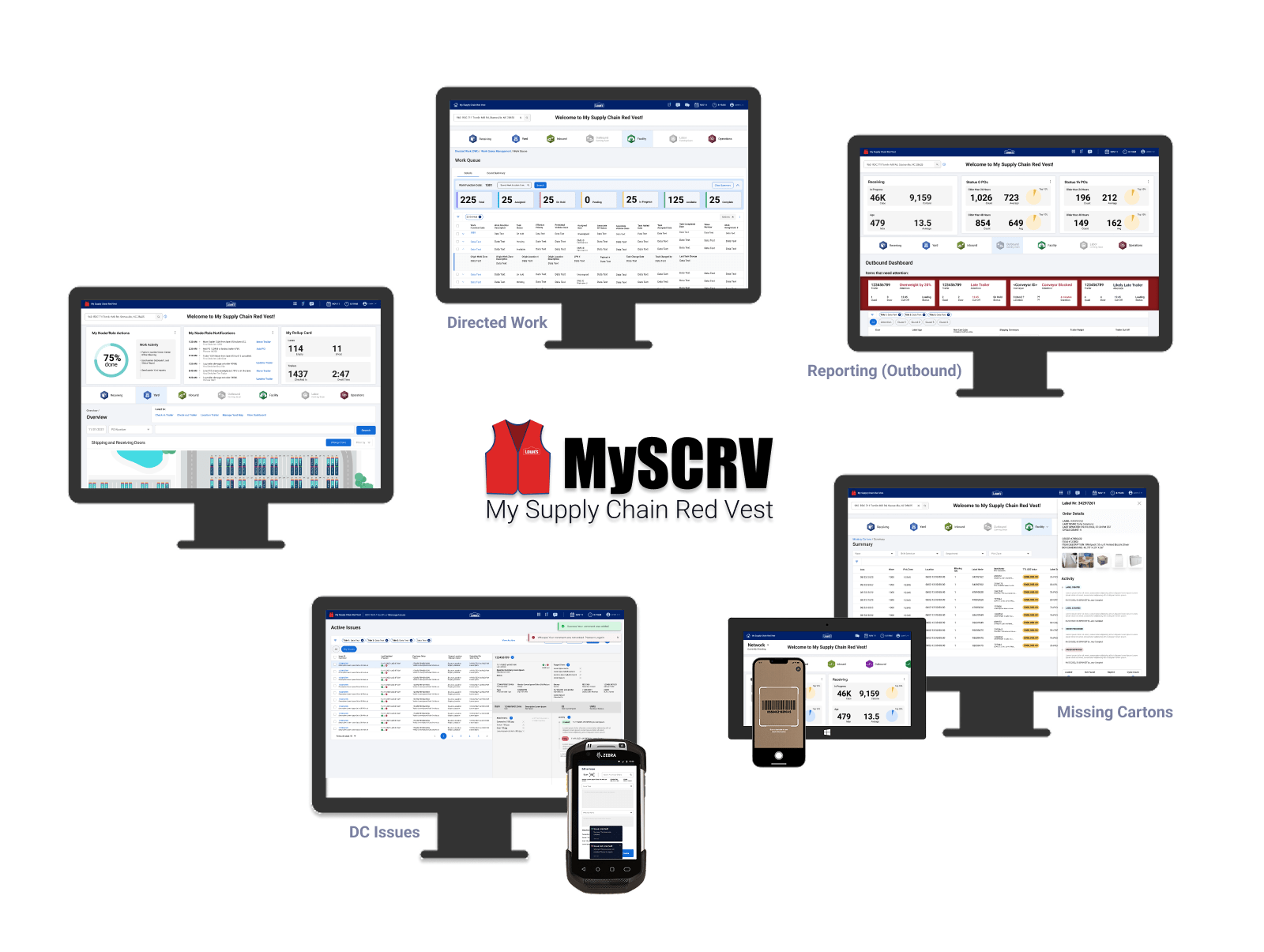
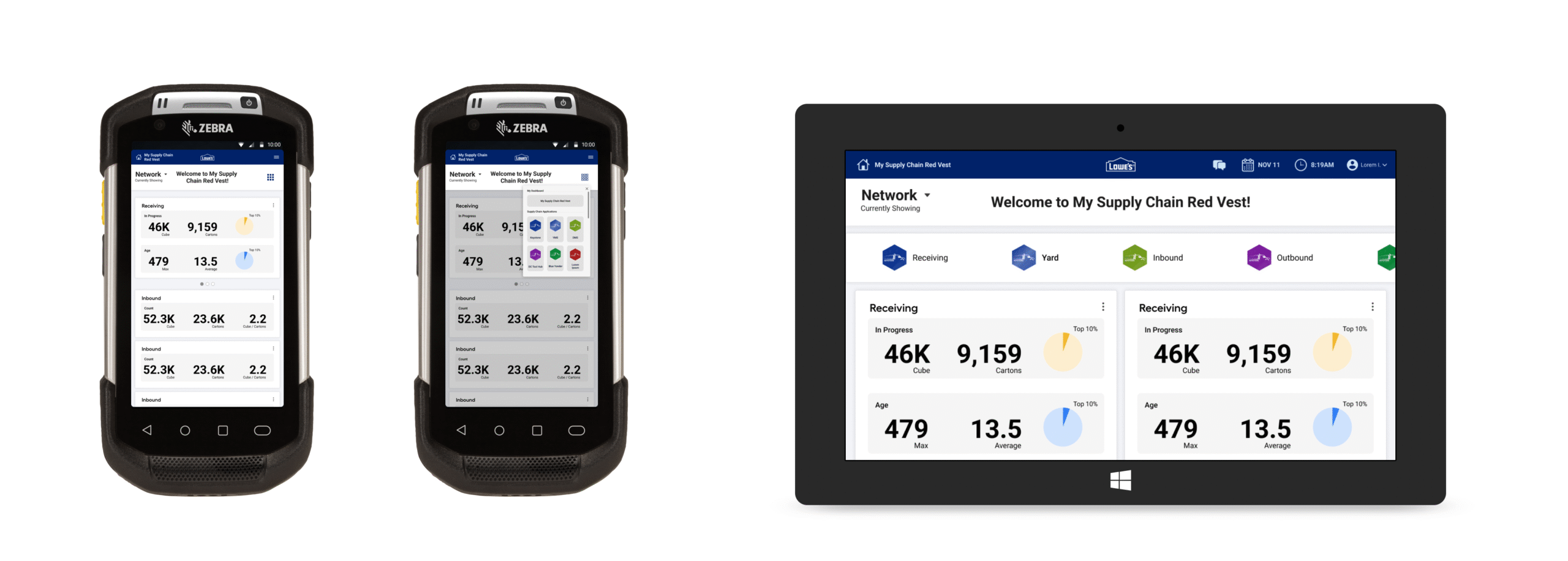
- Unified dashboards for mobile and desktop.
- Real‑time throughput and receiving views.
- Integrated feedback and ticket tracking.
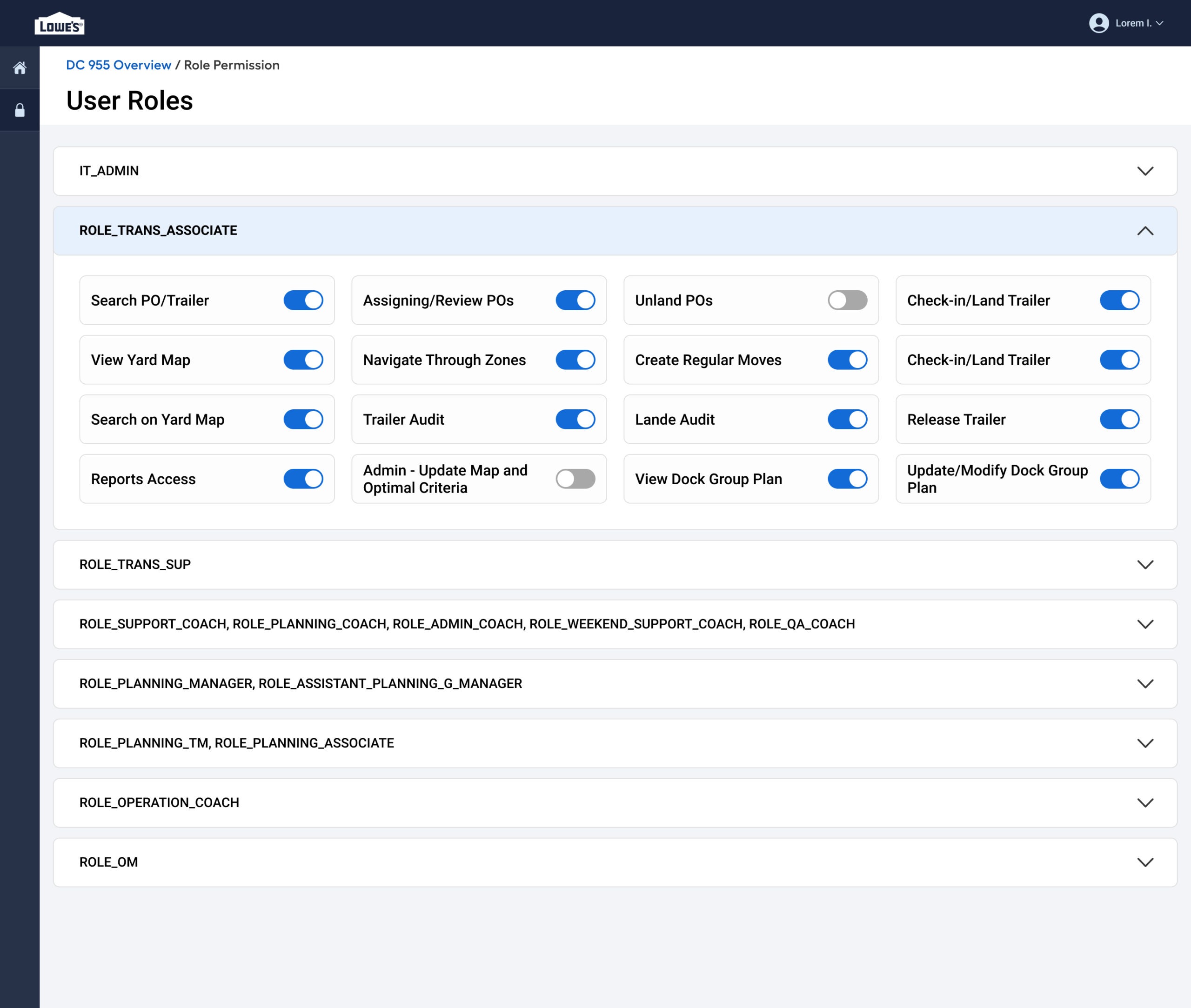
- Node‑specific role permissions.
Impact
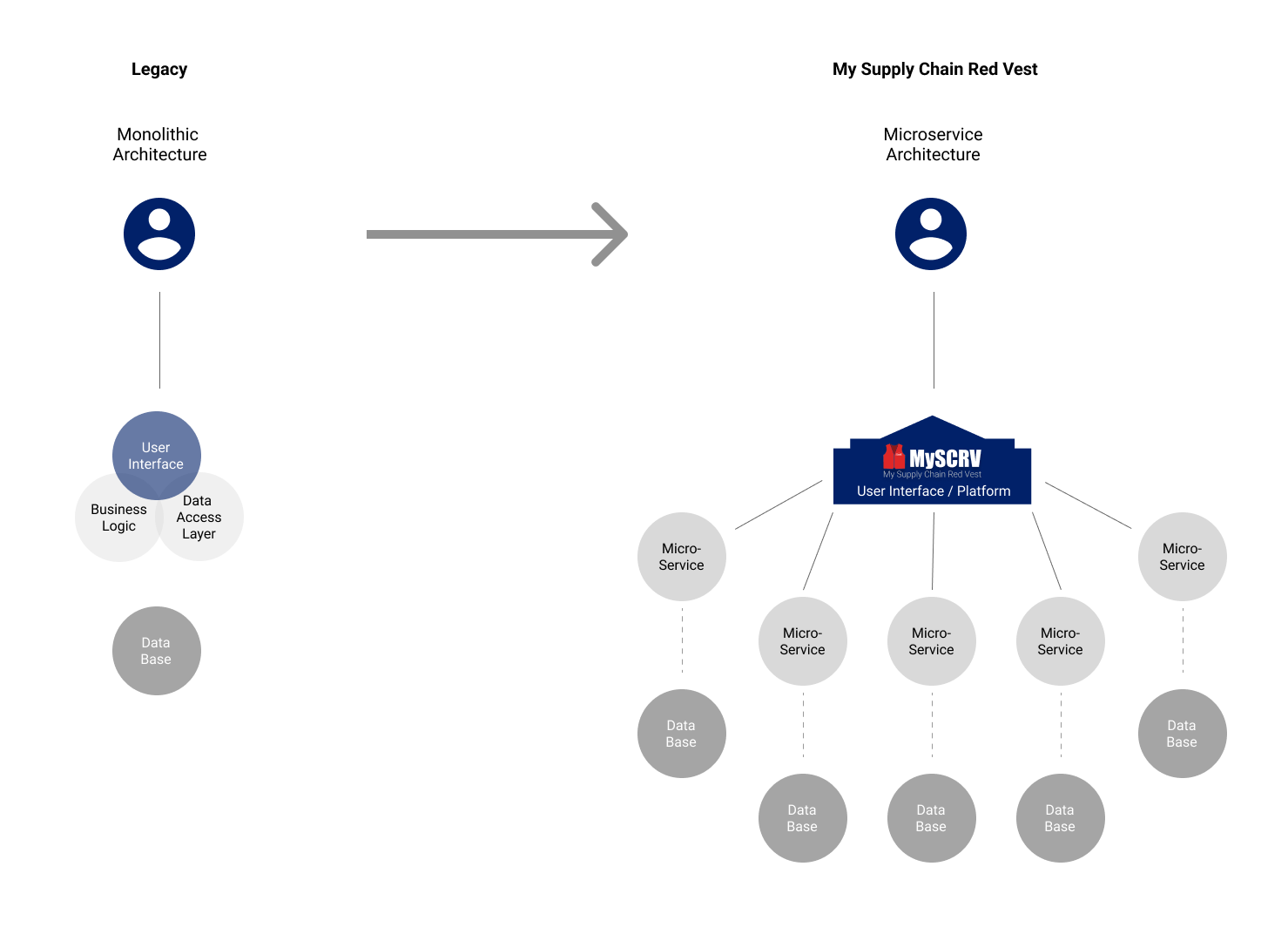
- 72% efficiency gain by consolidating 12 systems into one.
- Reduced manual processes and improved associate satisfaction.
- Established a scalable platform adopted across Lowe’s supply chain.
Key Learnings
- Reinforced ability to lead systemic transformation and design for measurable impact.
- Deep collaboration ensured adoption and alignment.
- Balancing complex data needs with usability required prioritization.
Results
I increased supply chain associate efficiency by 72% by streamlining 12 fragmented legacy systems into a unified, dynamic, multi-tiered, role-based access control, user-centric supply chain platform known as My Supply Chain Red Vest.
Key Challenges
1. Project Overview
- Context: Lowe’s supply chain associates struggled with fragmented legacy systems that slowed operations.
- My Role: Principal UX Designer — led information architecture, interaction design, instructional design, and product design.
- Tools: Figma, Sketch, PowerPoint, Design Thinking Workshops, Visio
- Team: Collaborated with product management, engineering, and UX researchers.
- Timeline: Multi-year initiative during a period of significant organizational change.
2. Problem Statement
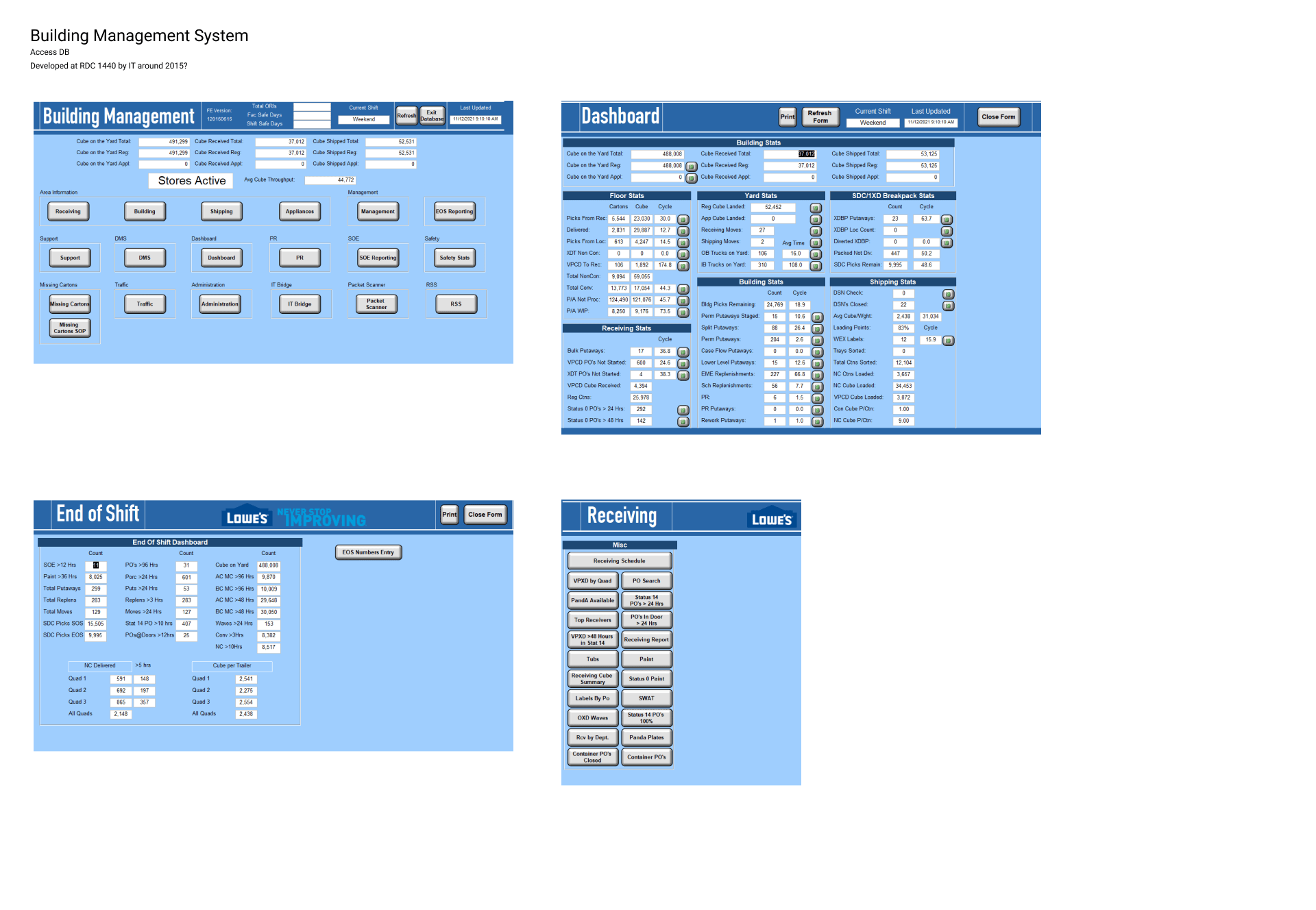
Supply chain associates reported inefficiencies and frustration with 12 separate legacy applications.
- Pain Points:
- Excessive context switching between legacy systems.
- Manual printed verification required.
- Limited data sharing across applications.
- Business Needs:
- Improve efficiency for all roles.
- Reduce errors and time needed to report and take action on data.
- Empower associates with real-time data access.
- Provide direct access to training materials.
- Provide a transitional experience while the platform is implemented and cascaded out to associates.
- Success Criteria: A unified, role-based platform that streamlined workflows and improved productivity.
How are different roles expected to take action in the unified platform?

How might we handle the transition from the legacy applications to the unified platform?
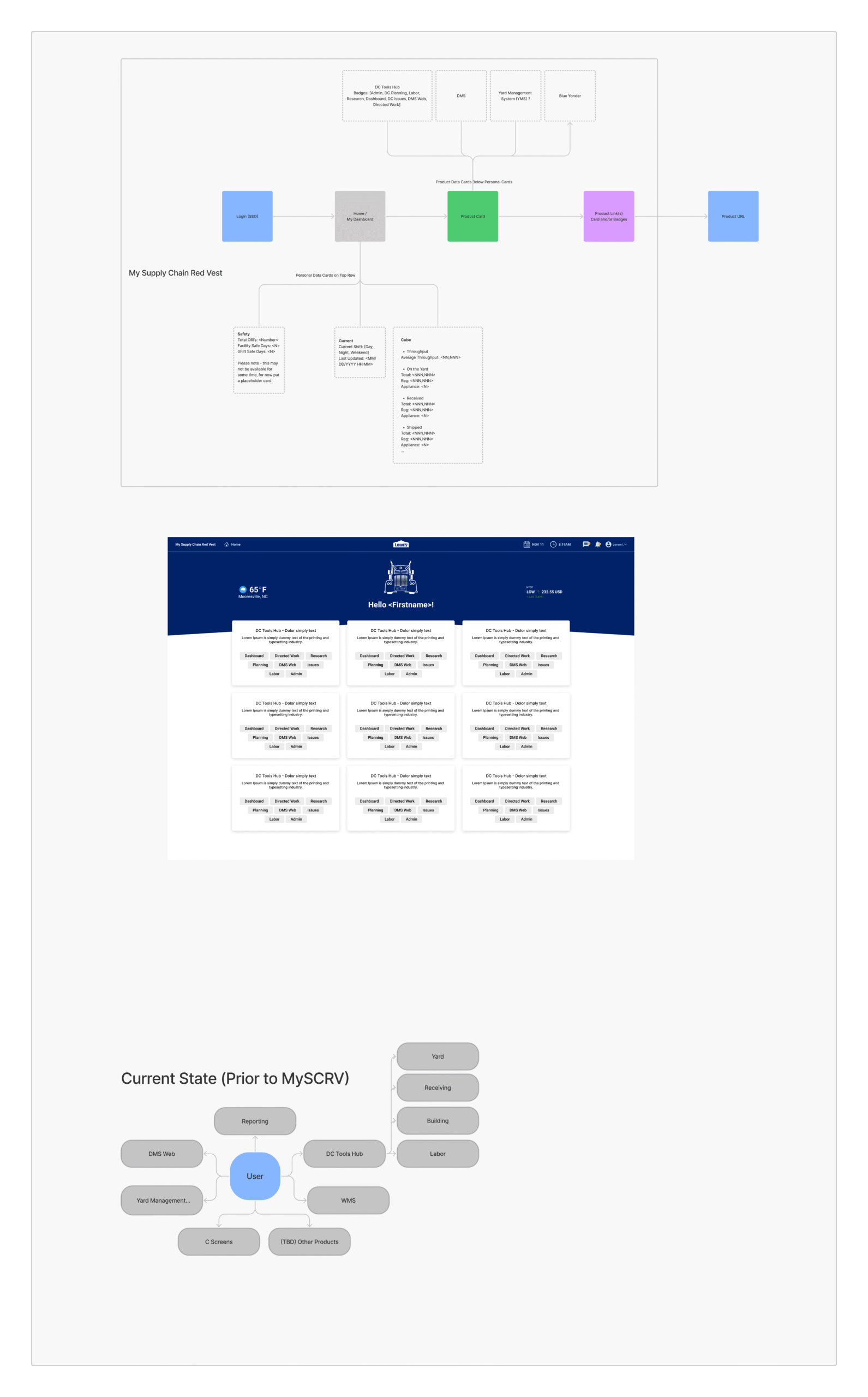
3. Research & Discovery
- Collaborated with User Experience Researchers.
- Conducted user interviews and feedback sessions with associates.
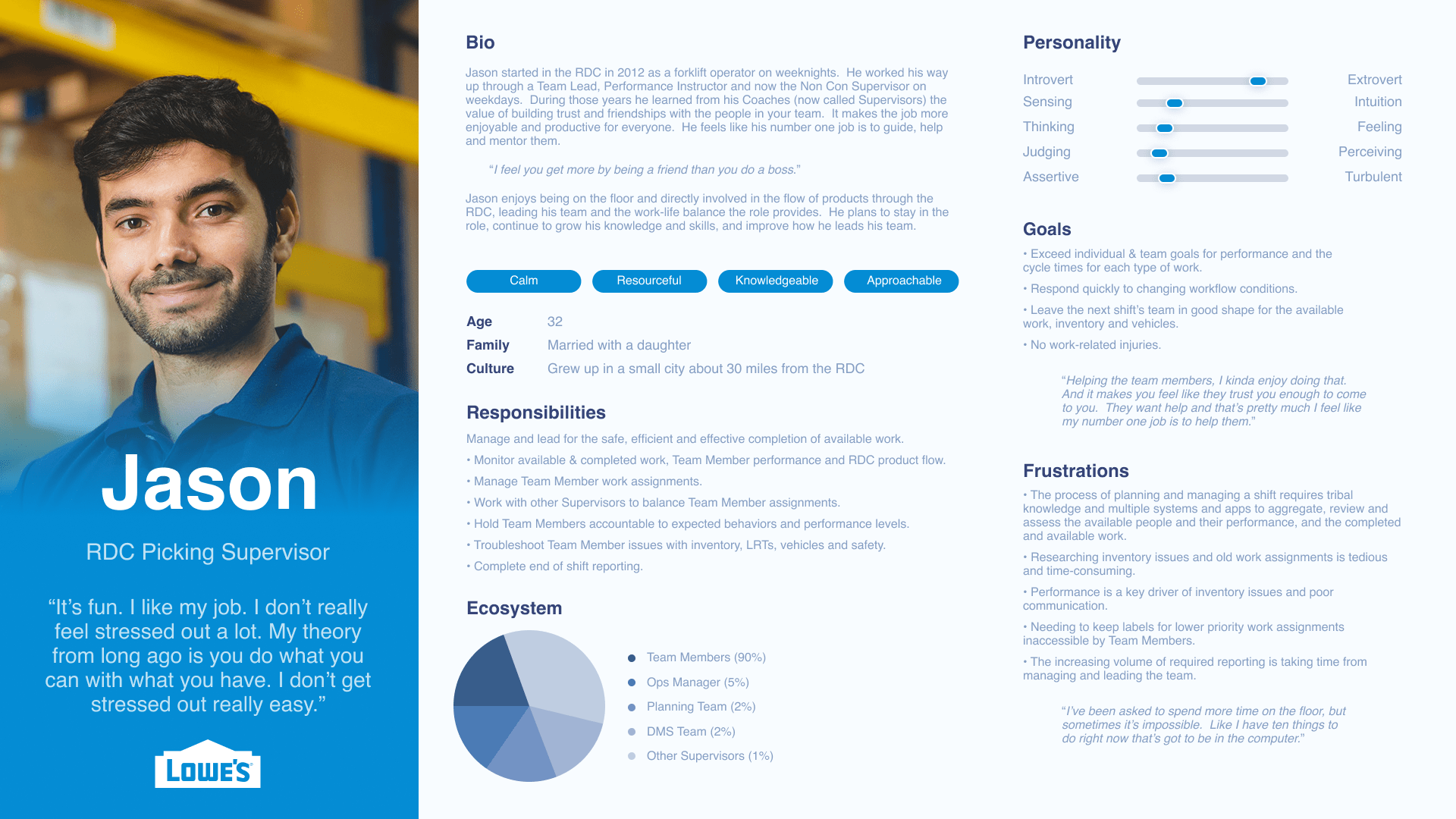
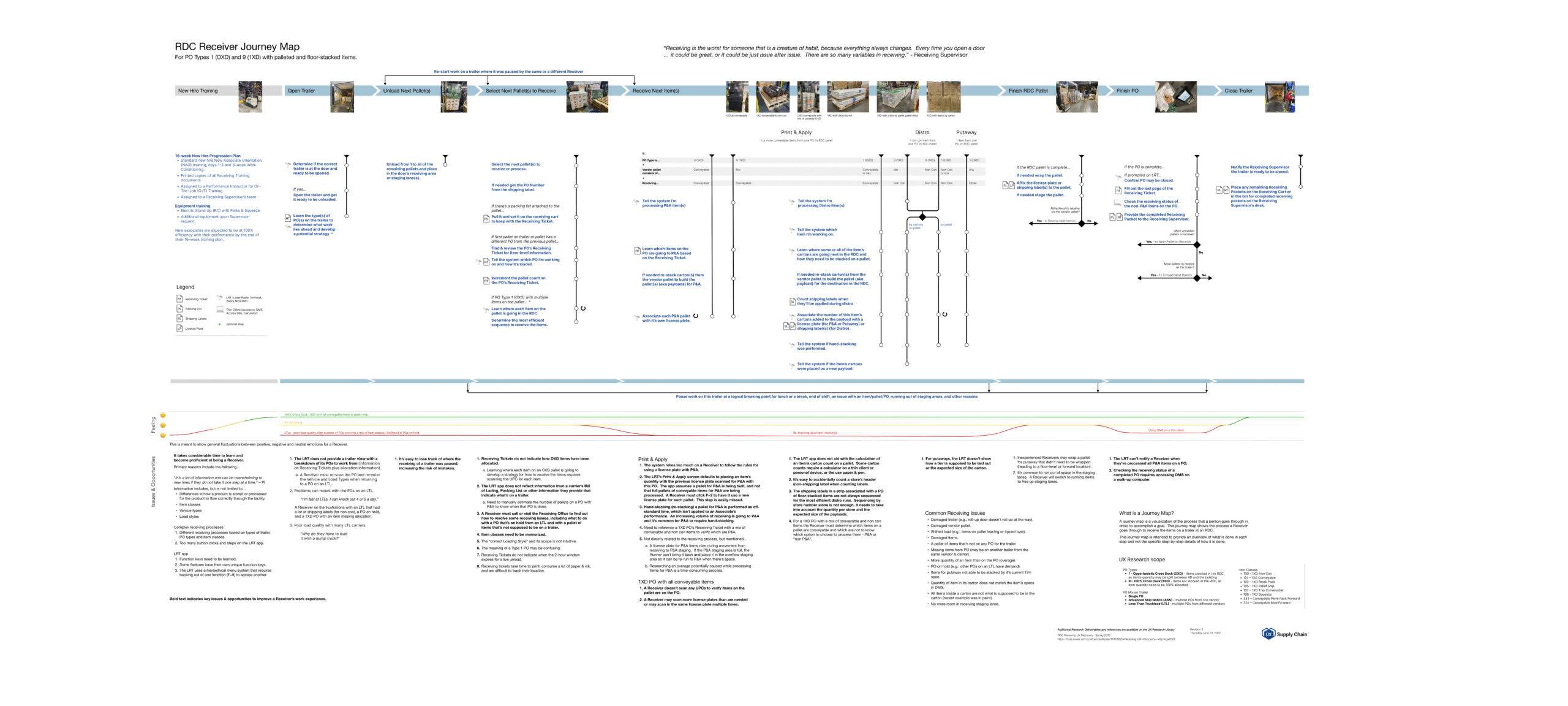
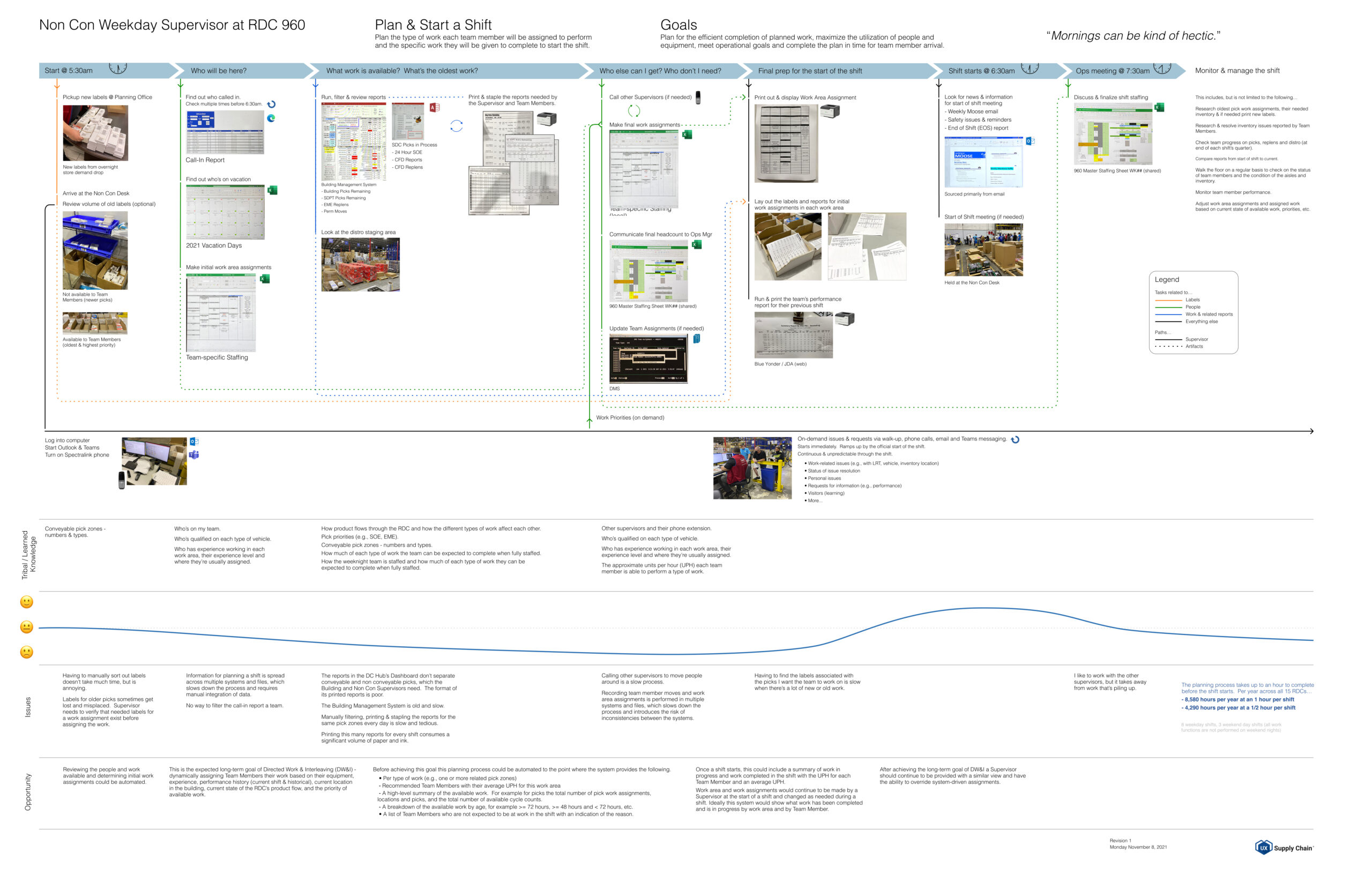
- Created personas and journey maps (e.g., RDC Picking Supervisor).
- Identified key challenges: inefficient applications, process bottlenecks, limited data sharing, and training gaps.
- Benchmarked against competitor systems to identify opportunities.

4. Design Process
- Flows & Wireframes: Mapped associate workflows and designed low-fidelity prototypes.
- Iterative Testing: Validated assumptions with stakeholders and end users.
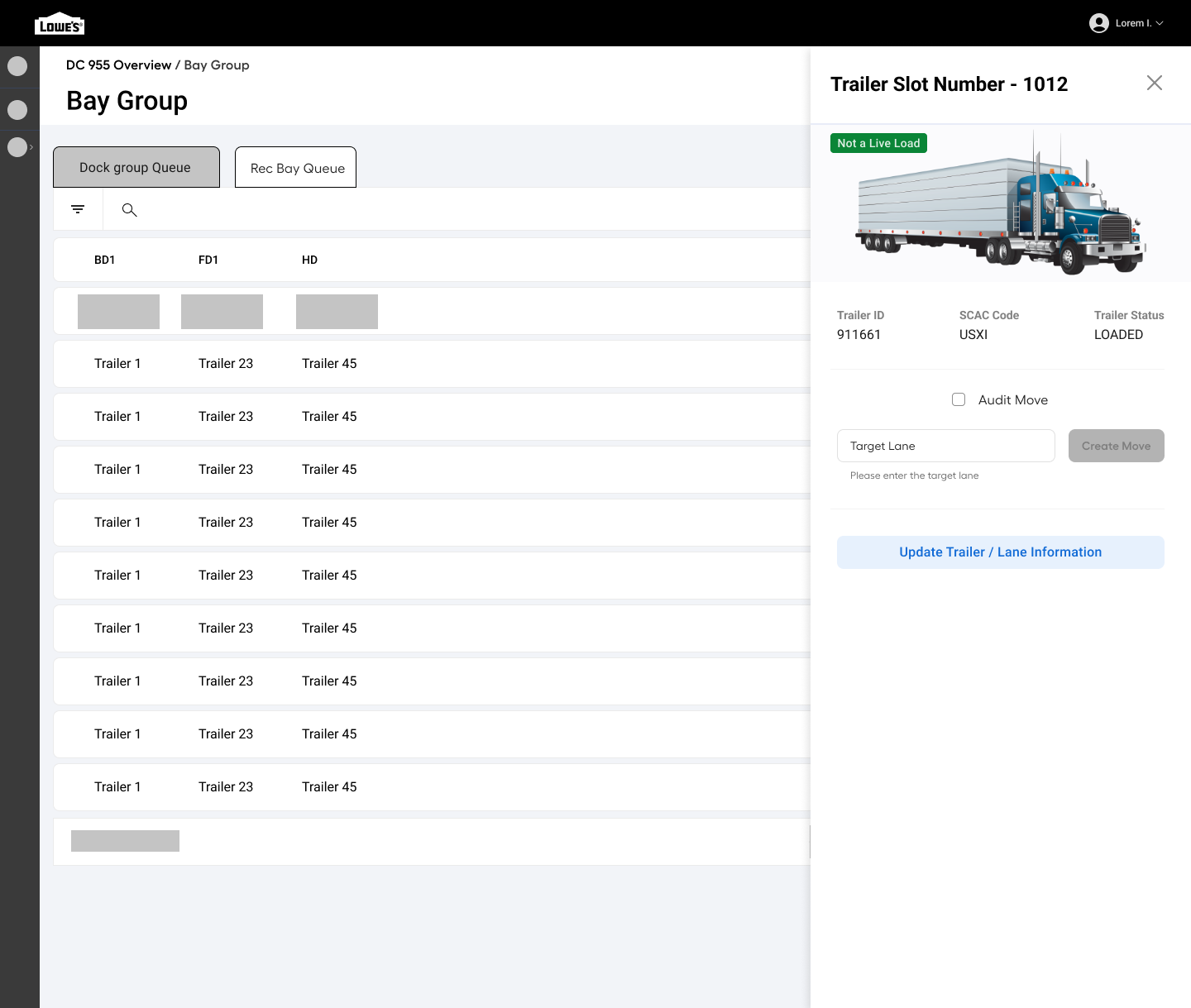
- Role-Based Access Control: Designed dynamic permissions tailored to associate responsibilities.
- Walkthrough Wizard: Introduced Lowe’s first-ever supply chain onboarding wizard to reduce training friction.
- Tools Used: Sketch, Figma, Visio, Design Thinking workshops.
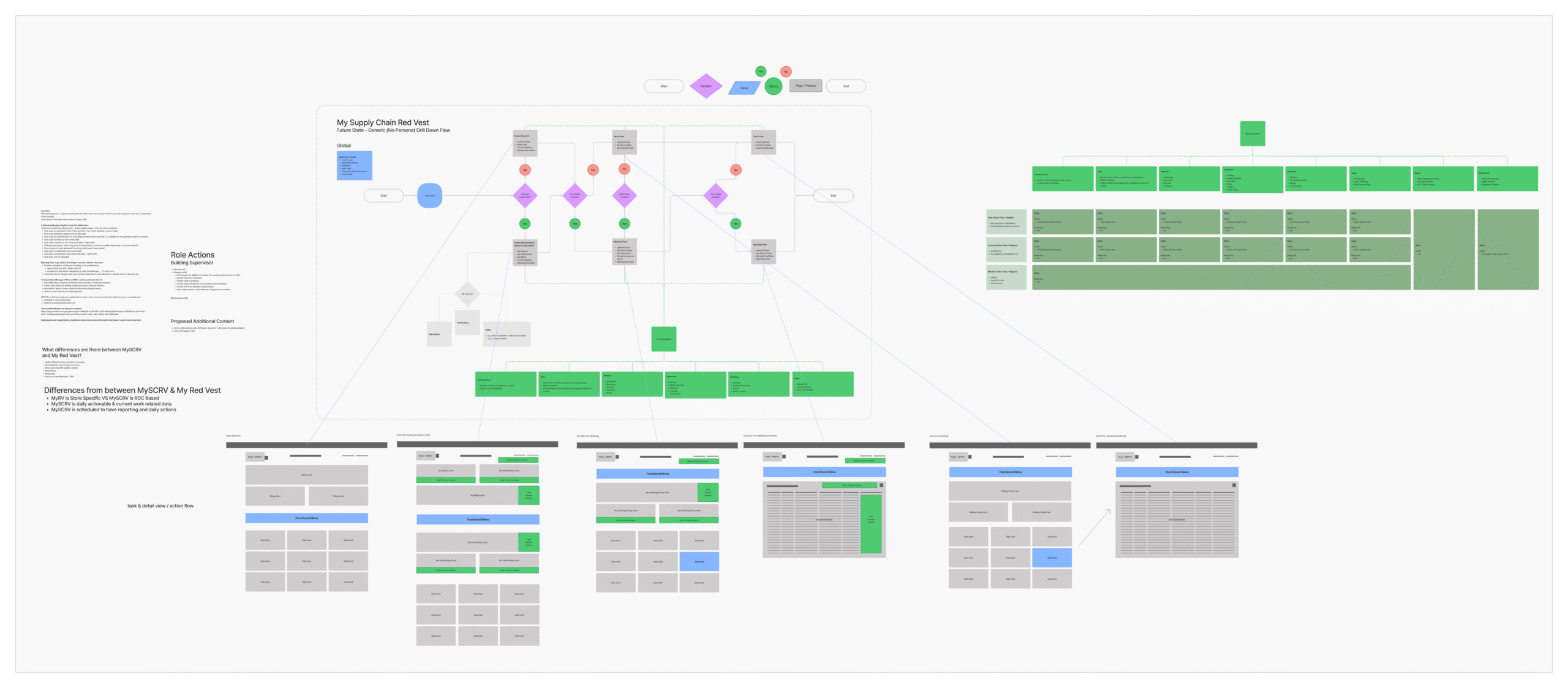
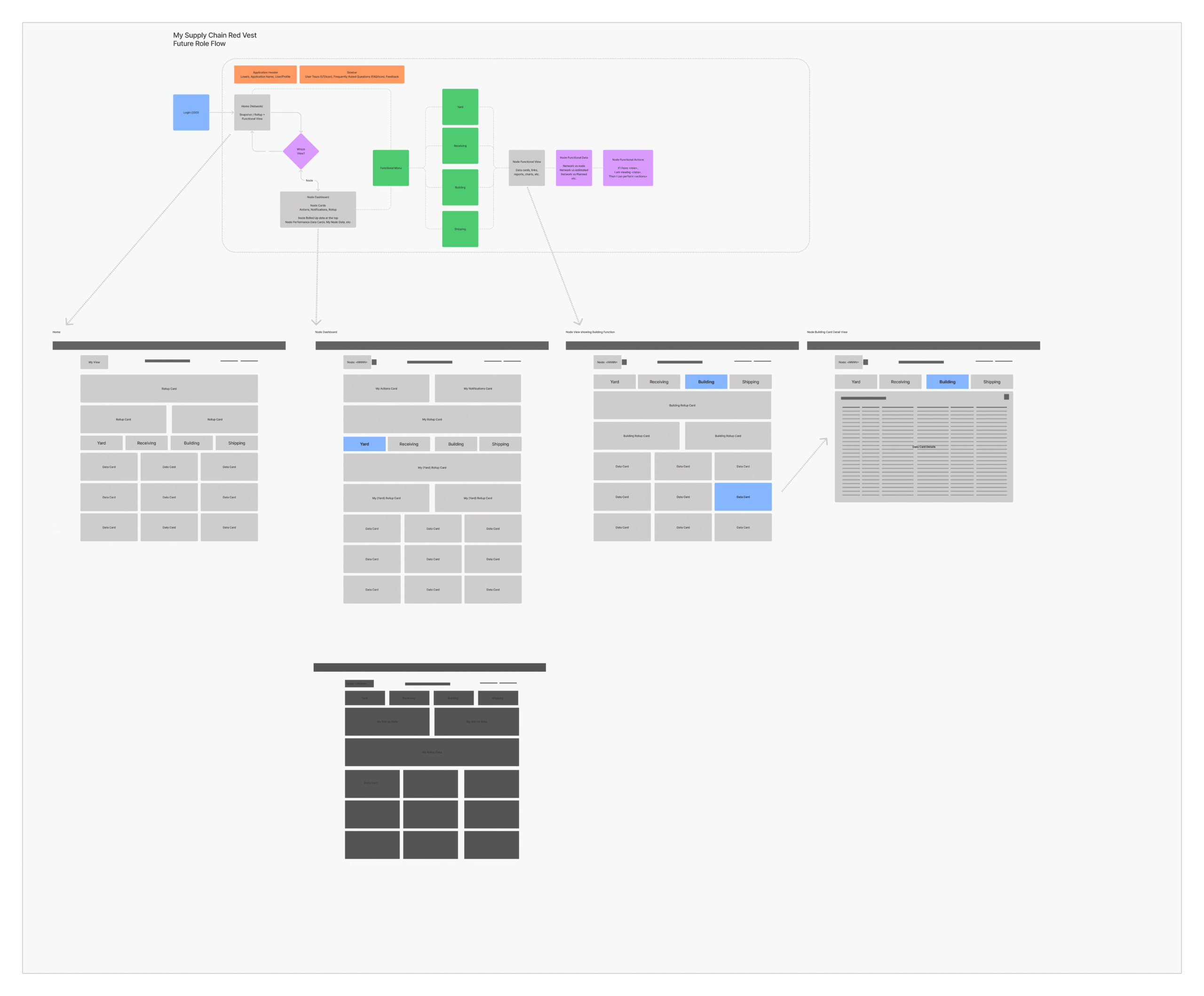
How are different roles expected to take action in the unified platform?
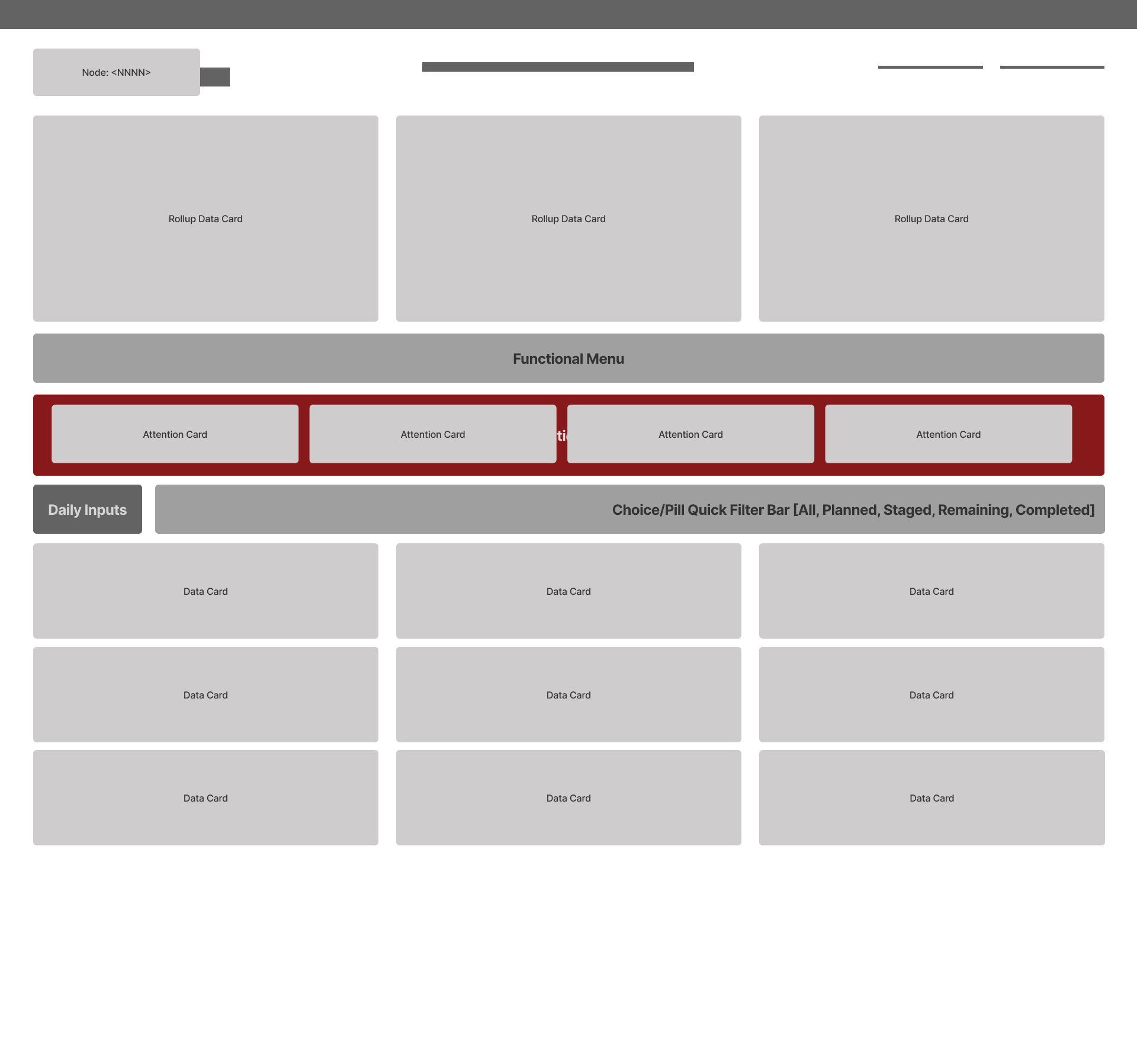
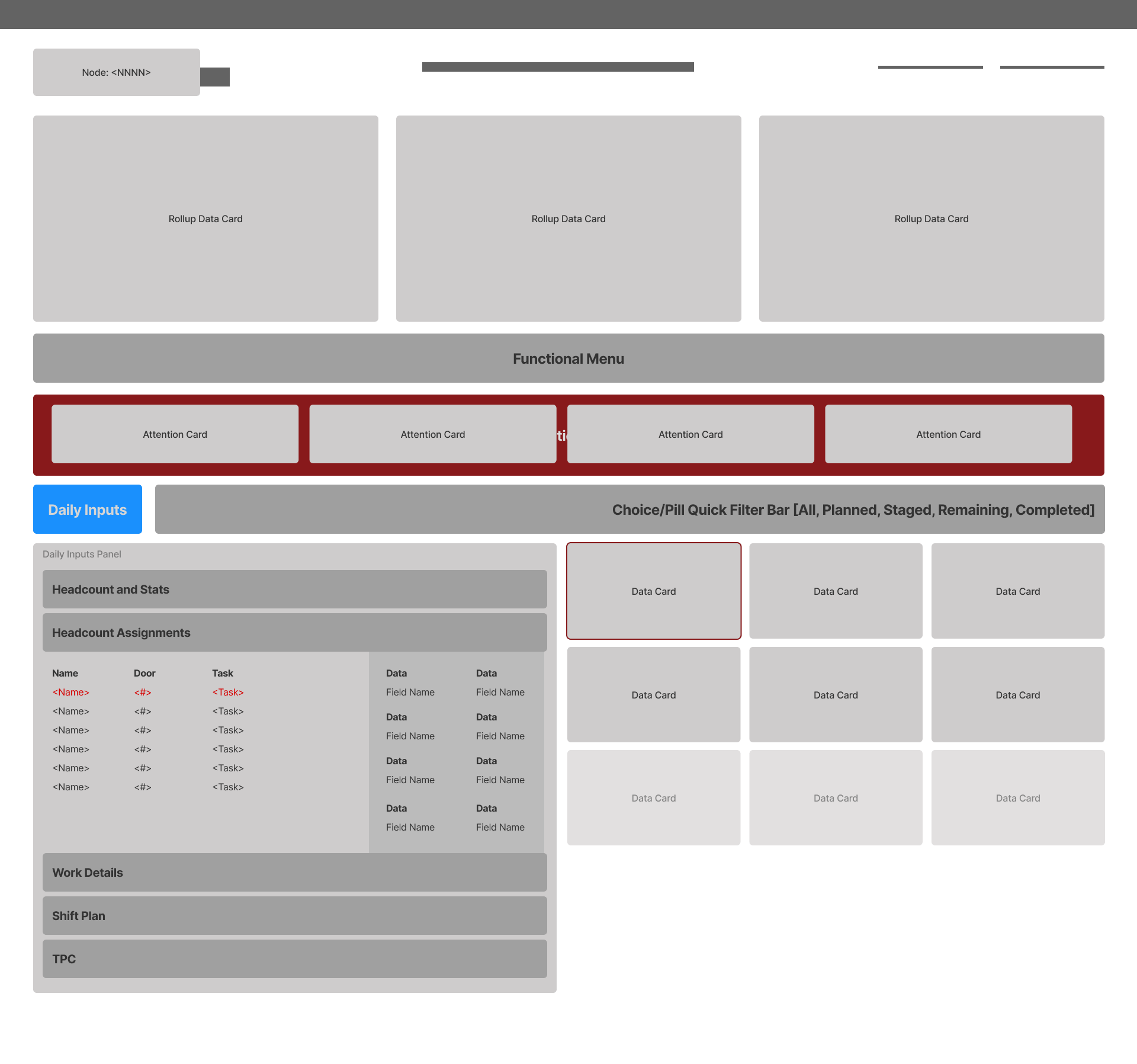
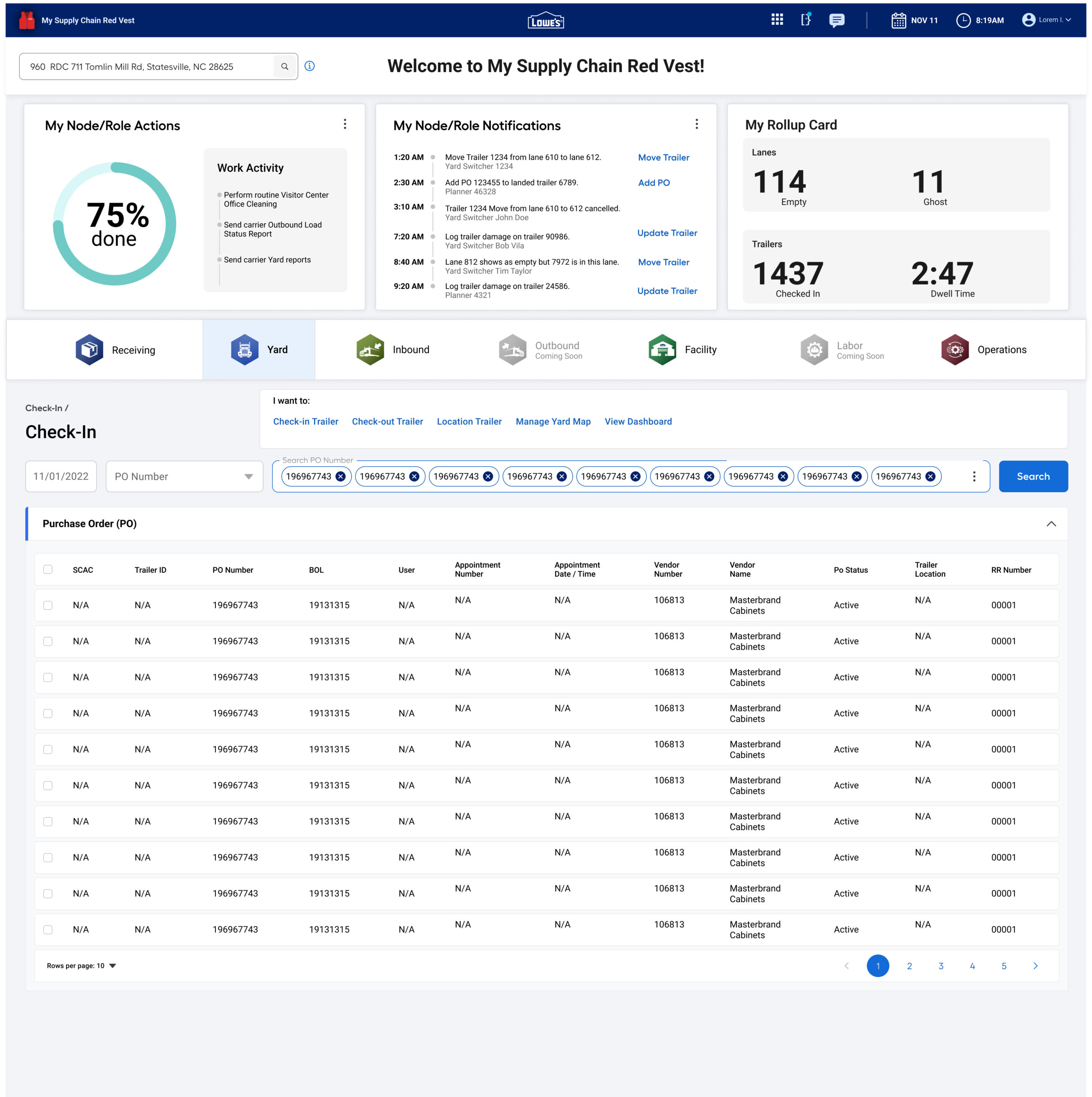
What might an action bar look like?
5. Solution
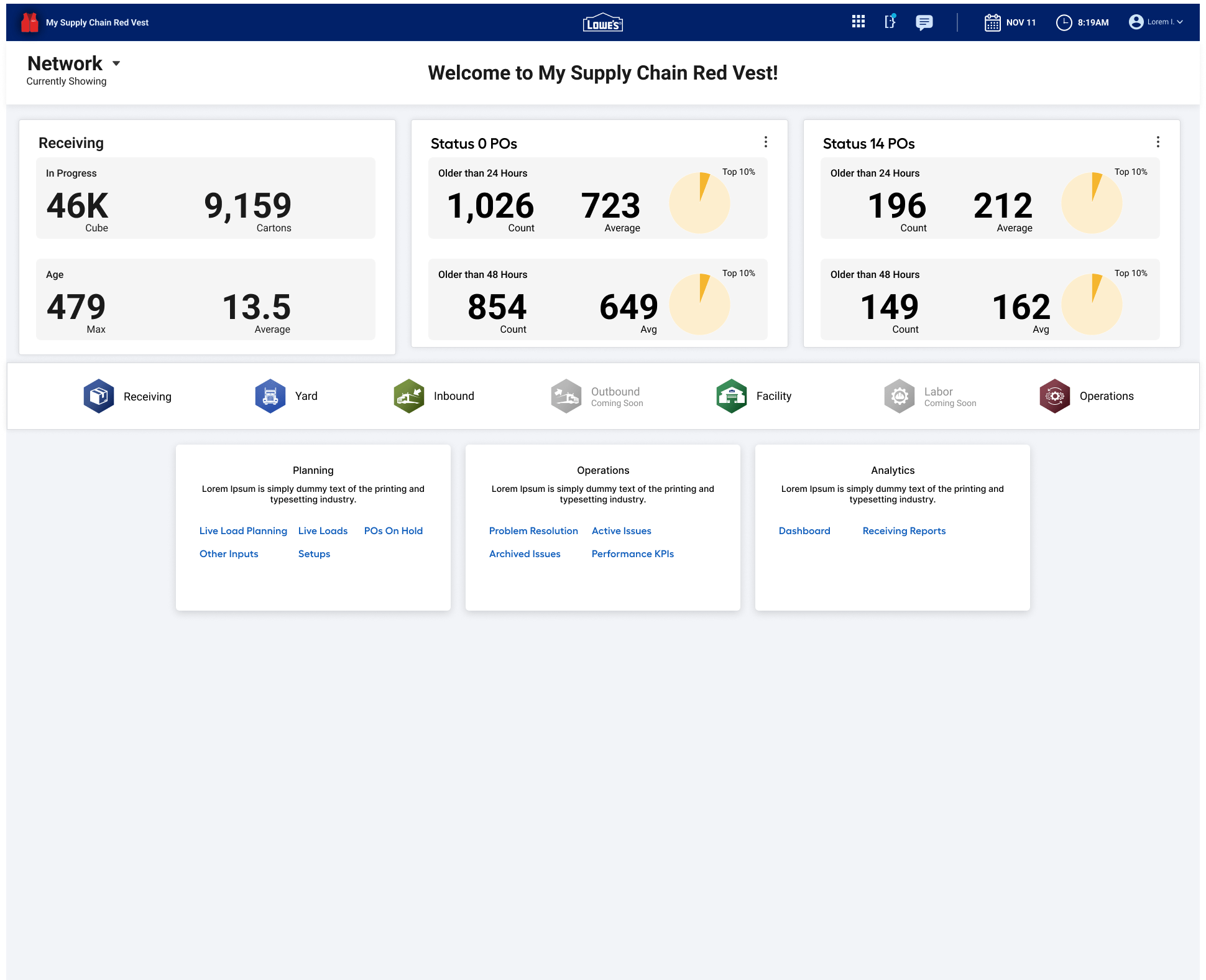
Delivered My Supply Chain Red Vest (MySCRV) — a unified, user-centric platform with:
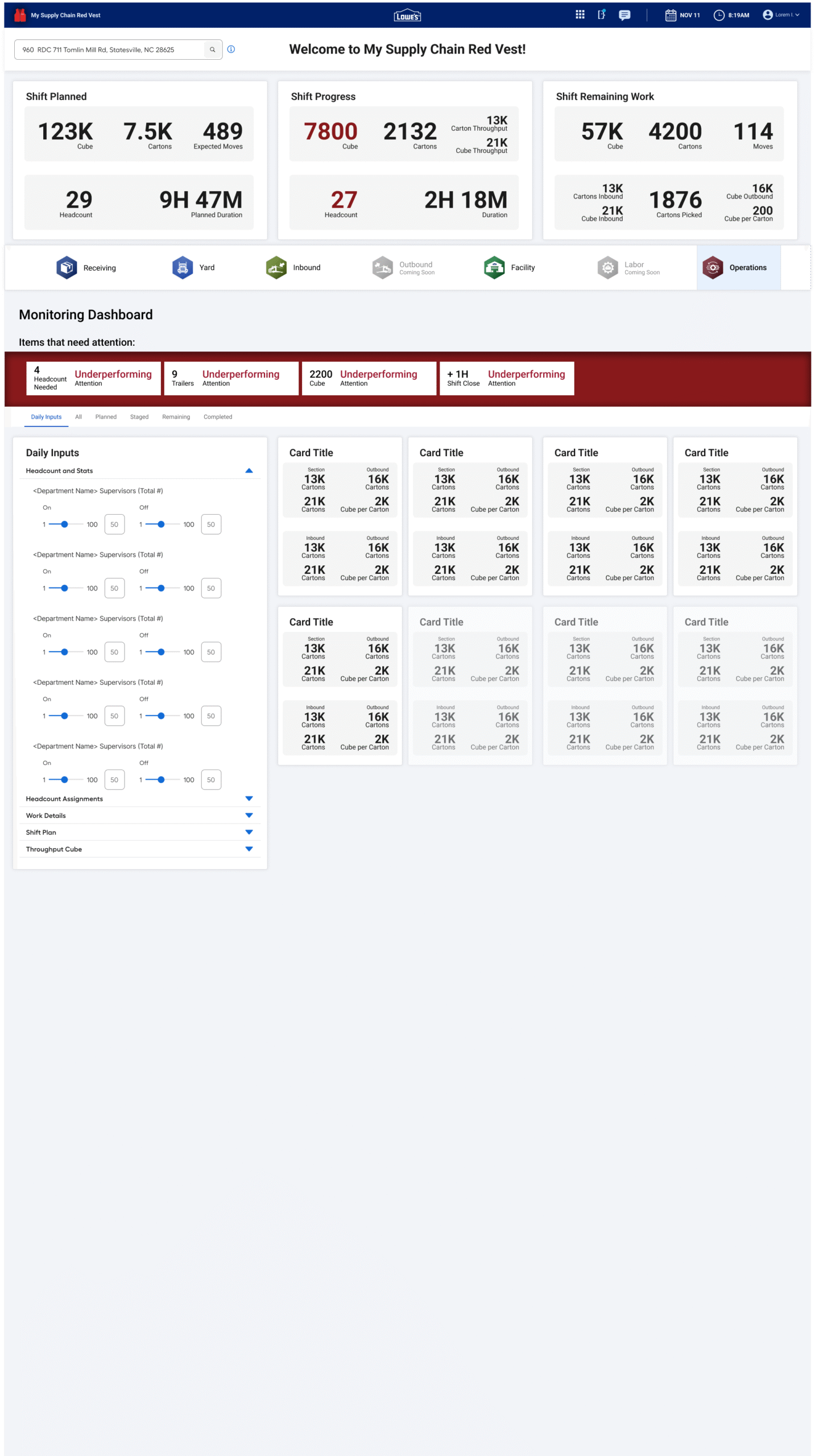
- All network view and a complete drill down into each node, department, and role views.
- Contextual menus based on node and role “actionability”.
- Mobile and desktop dashboards for action items based on node and role.
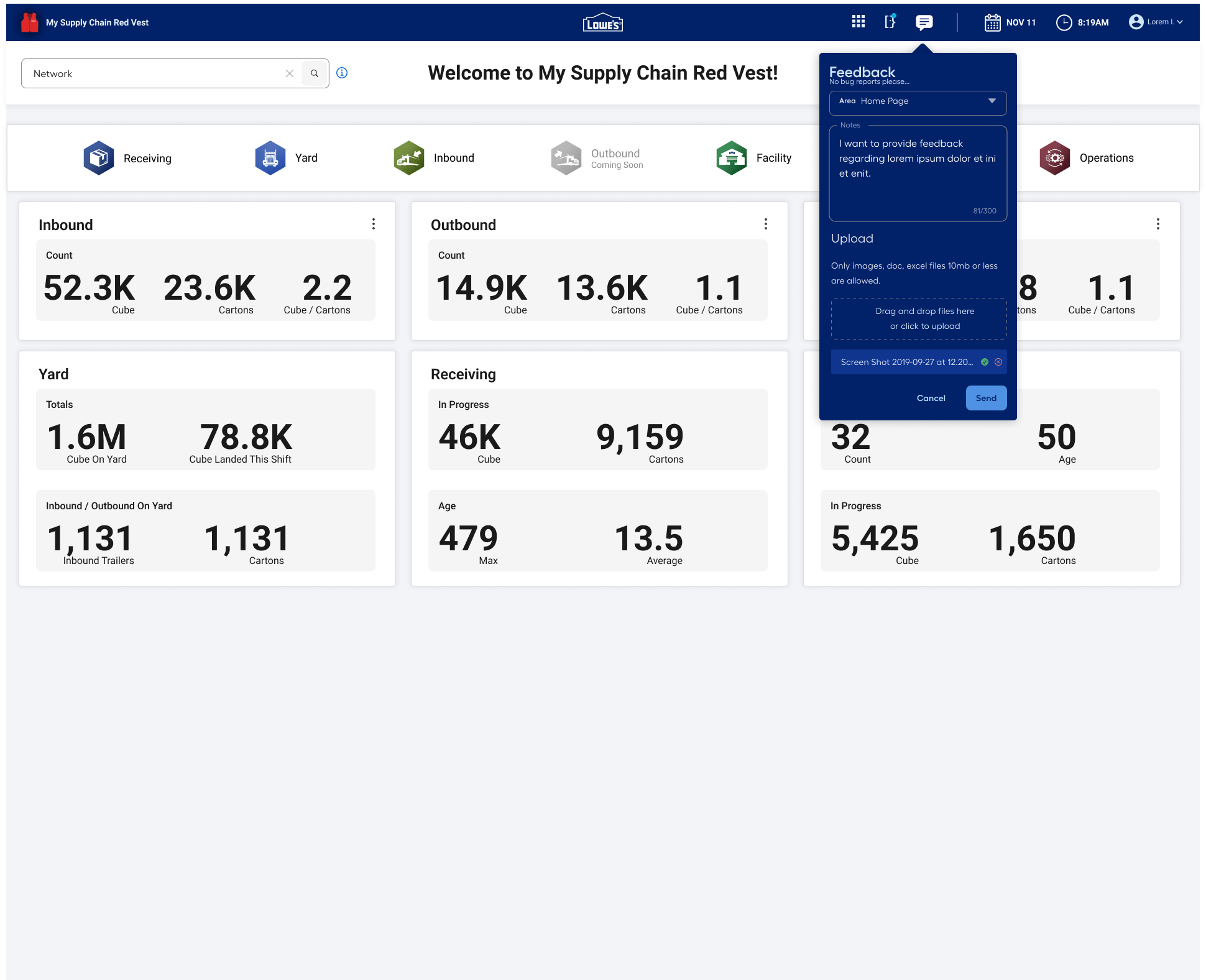
- Integrated feedback mechanisms.
- Real-time throughput and receiving views.
- Node-specific role permissions and landing details.
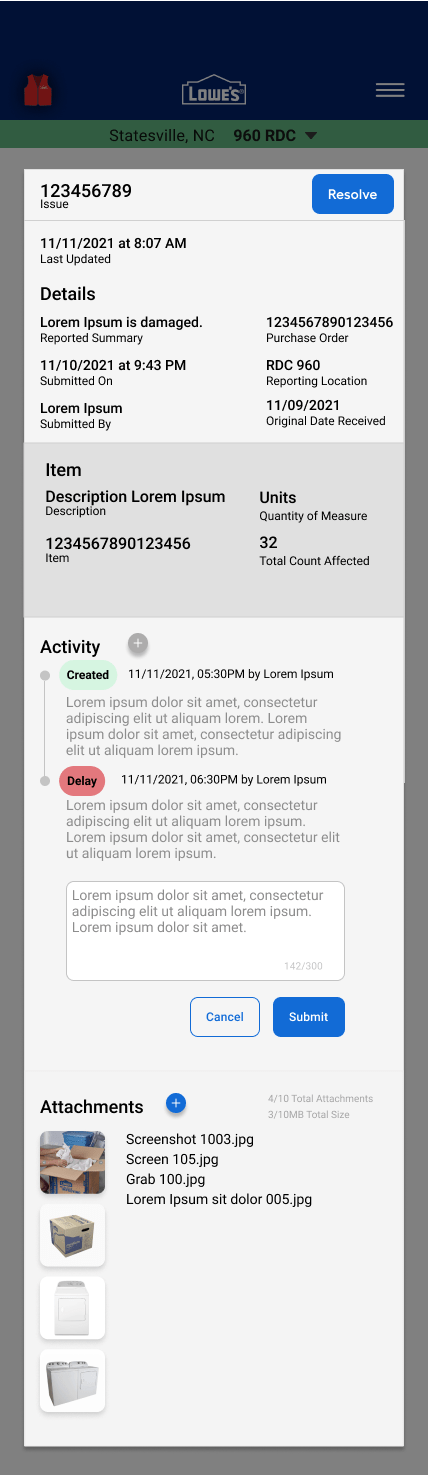
- Problem ticket tracking and resolution flows.
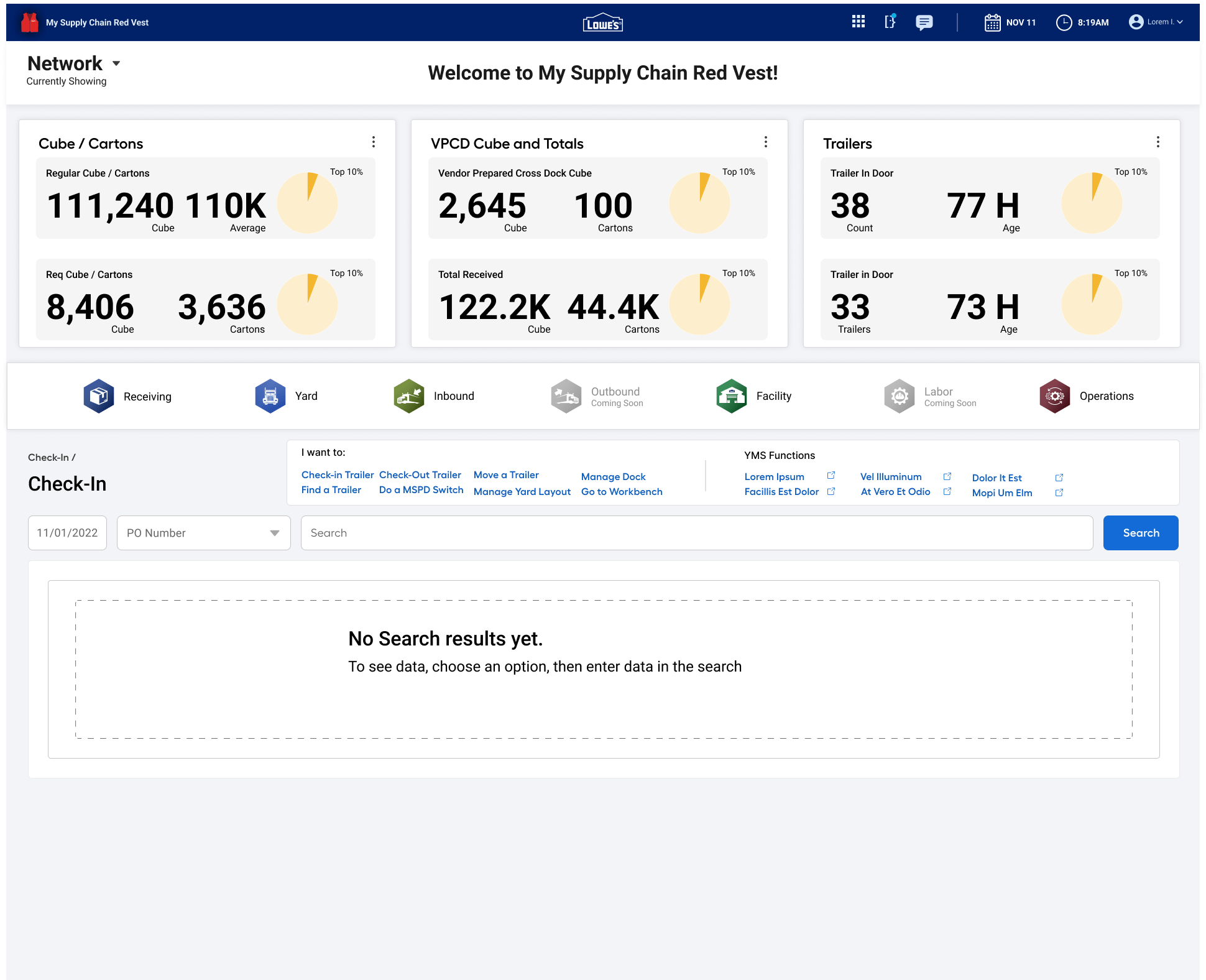
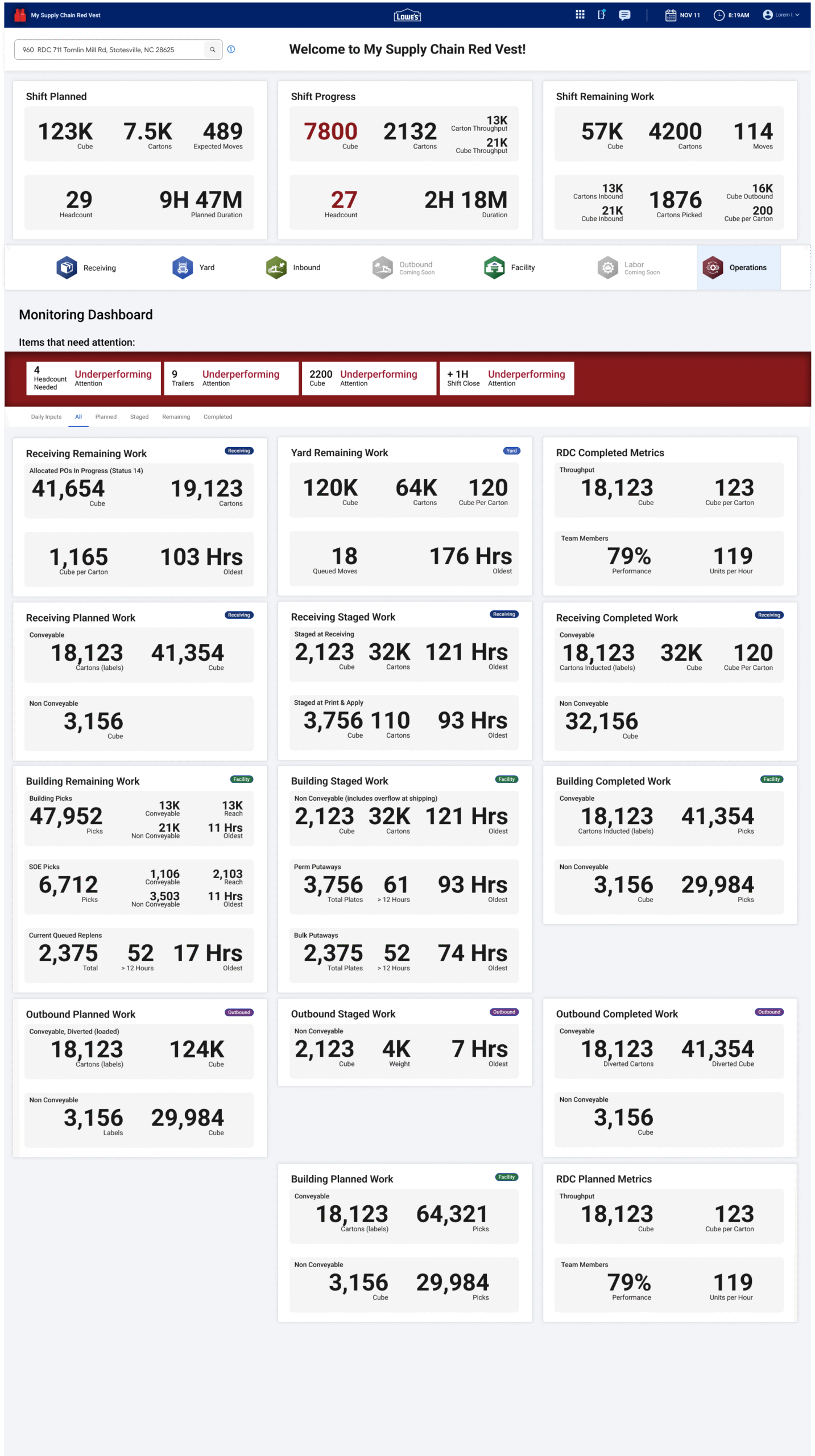
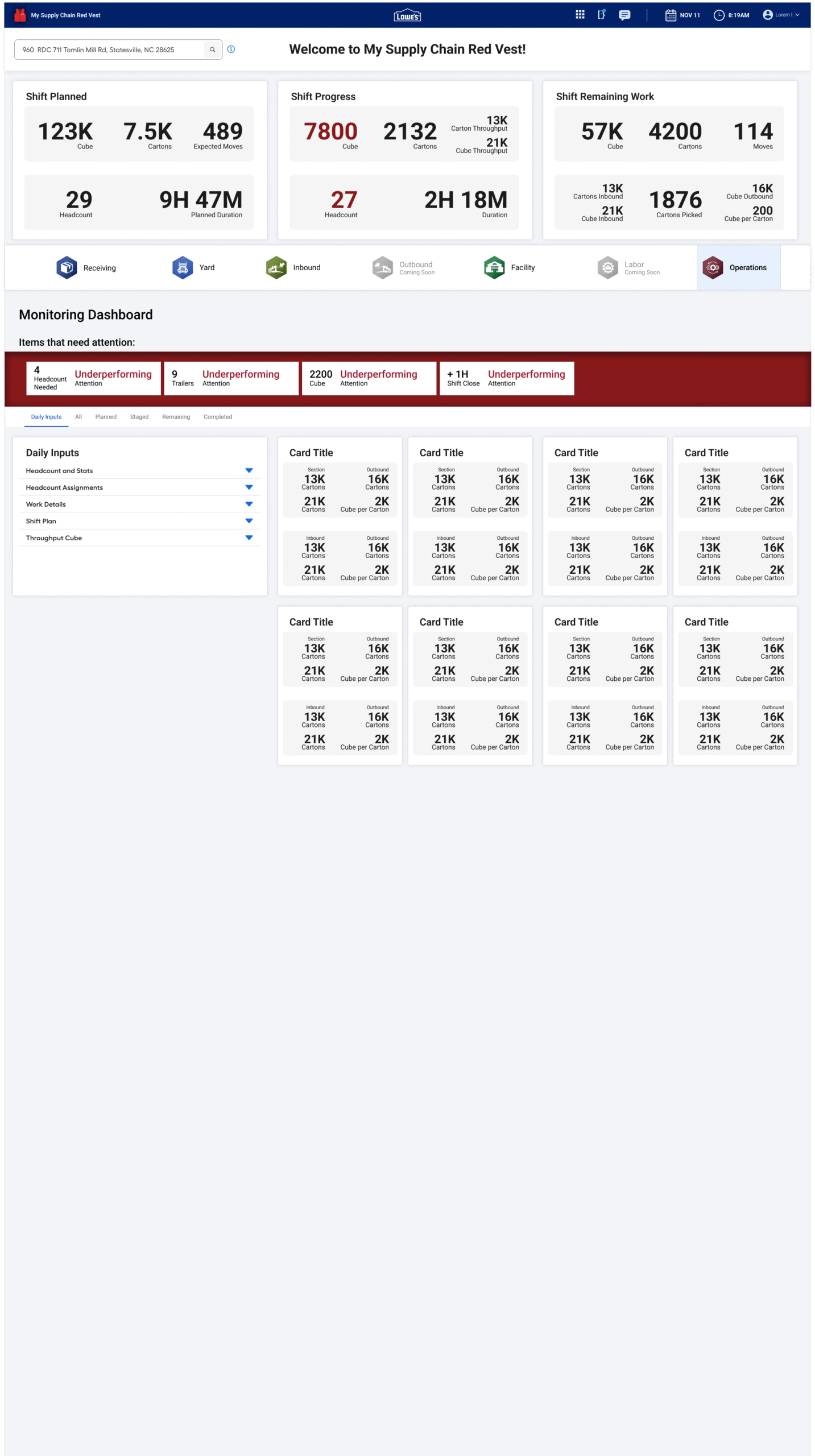
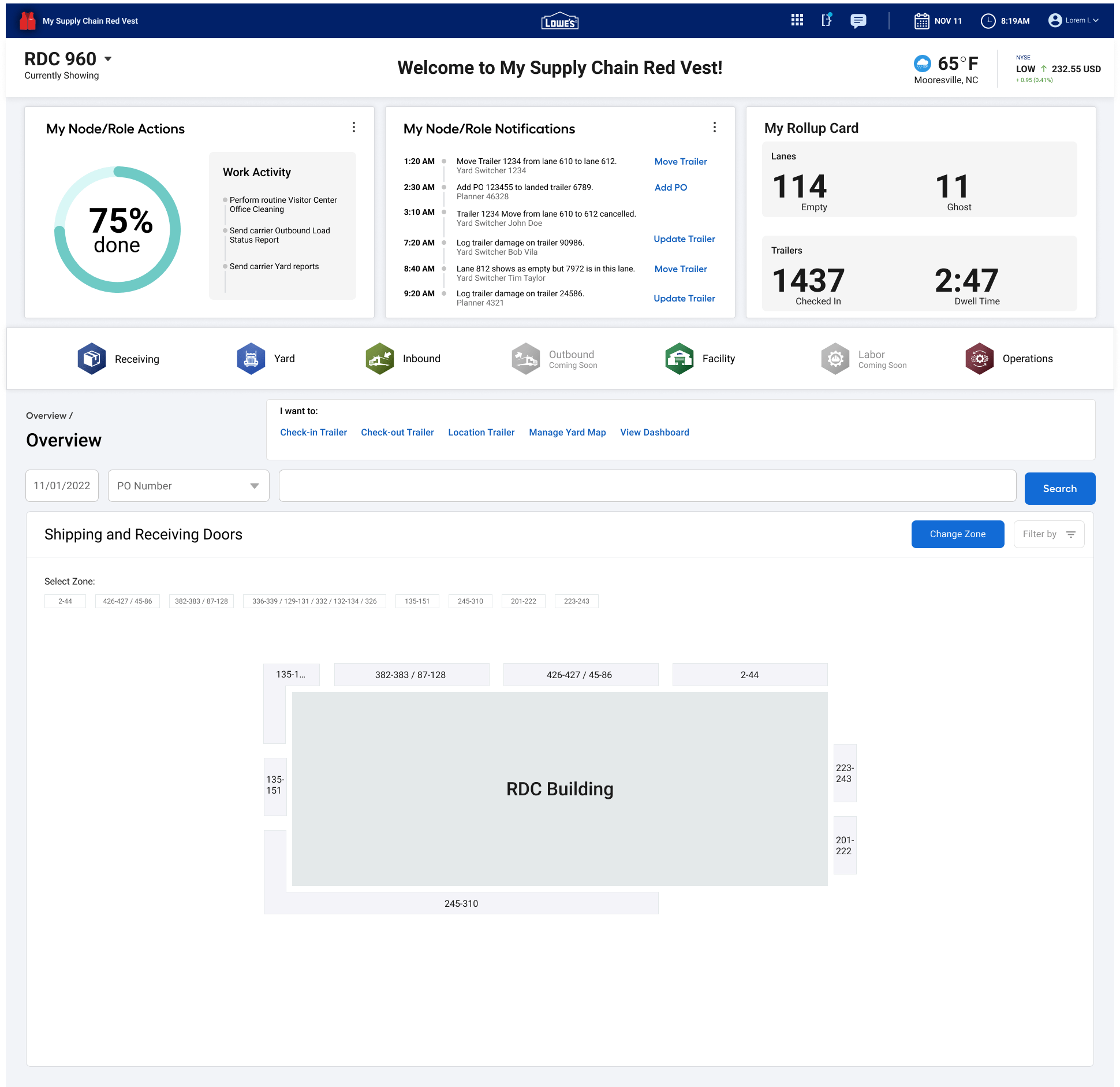
What might a manager be able to provide inputs for?
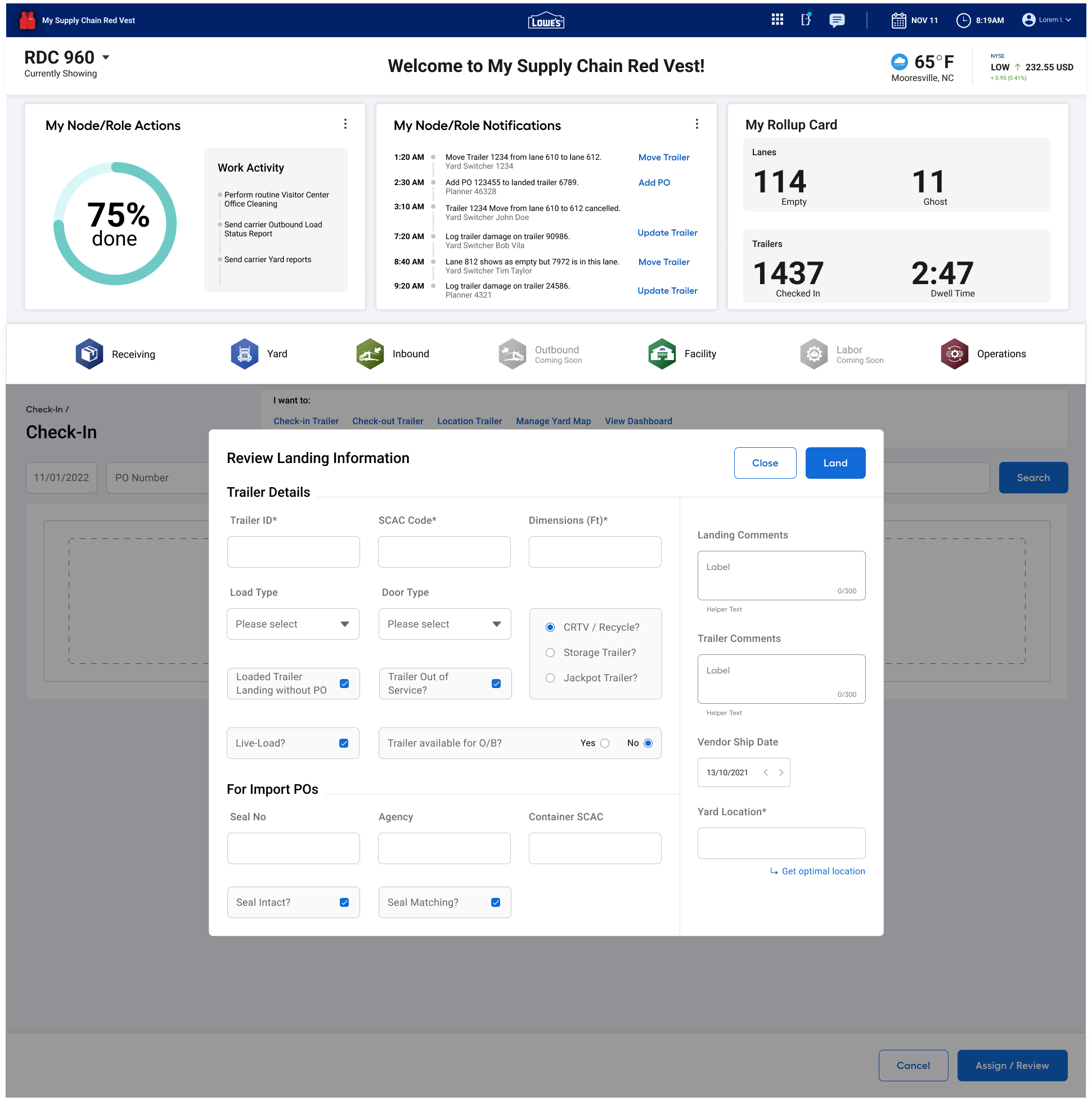
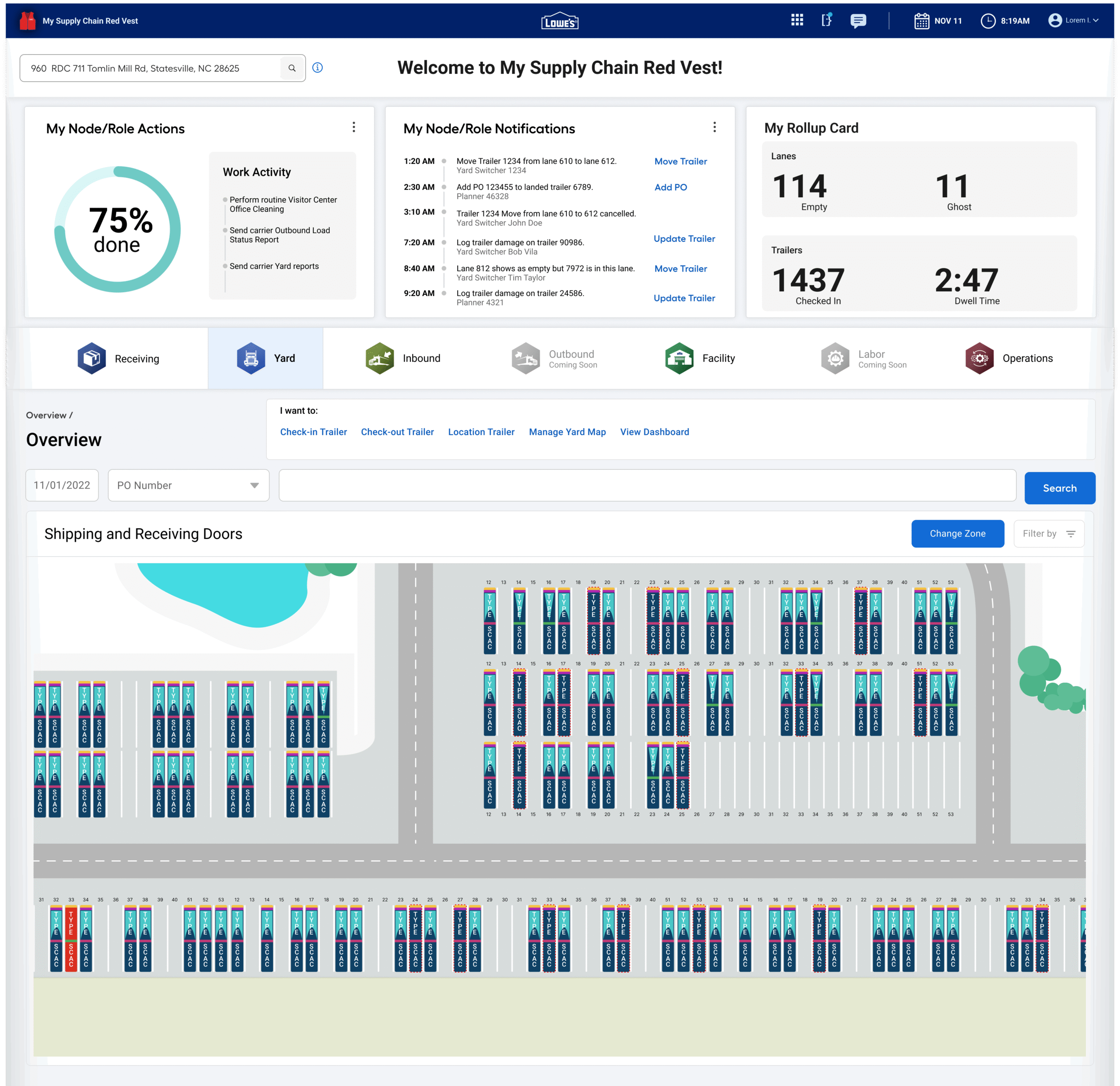
What might a specific yard view look like?
How do all roles report issues?
What if there is feedback about the platform, can associates provide feedback?
6. Impact & Results
- Efficiency Gains: Increased associate efficiency by 72% by consolidating 12 systems into one platform.
- Operational Improvements: Reduced time spent searching for information and eliminated redundant manual processes.
- Adoption: Widely adopted across Lowe’s supply chain, becoming the standard platform for associates.
“…He works equally well with Product Management and Engineering, questioning assumptions with the intent of deriving the best possible user experience.
Arricka Brouwer | Program Management Leader, Supply Chain
He looks at holistic user experience design, which ultimately creates more cohesive and thoughtful user interactions with technology….”
7. Reflections & Learnings
- What Worked: Deep collaboration with stakeholders and iterative testing ensured alignment and adoption.
- Challenges: Balancing complex data needs with usability required careful prioritization.
- Growth: Reinforced my ability to lead systemic transformation and design for measurable impact.
8. Next Steps
- Expand role-based access to additional supply chain functions.
- Continue refining onboarding and training flows.
- Explore AI-driven predictive analytics to further optimize logistics.